
The question
The work began with a maternal-health challenge: how might important physiological changes be monitored between care visits? The question focused attention on the periods when a patient is away from a clinic and a care team has limited visibility.
It was a starting point for exploration, rather than a claim that a wearable could already provide a clinical answer.
A wearable concept takes shape
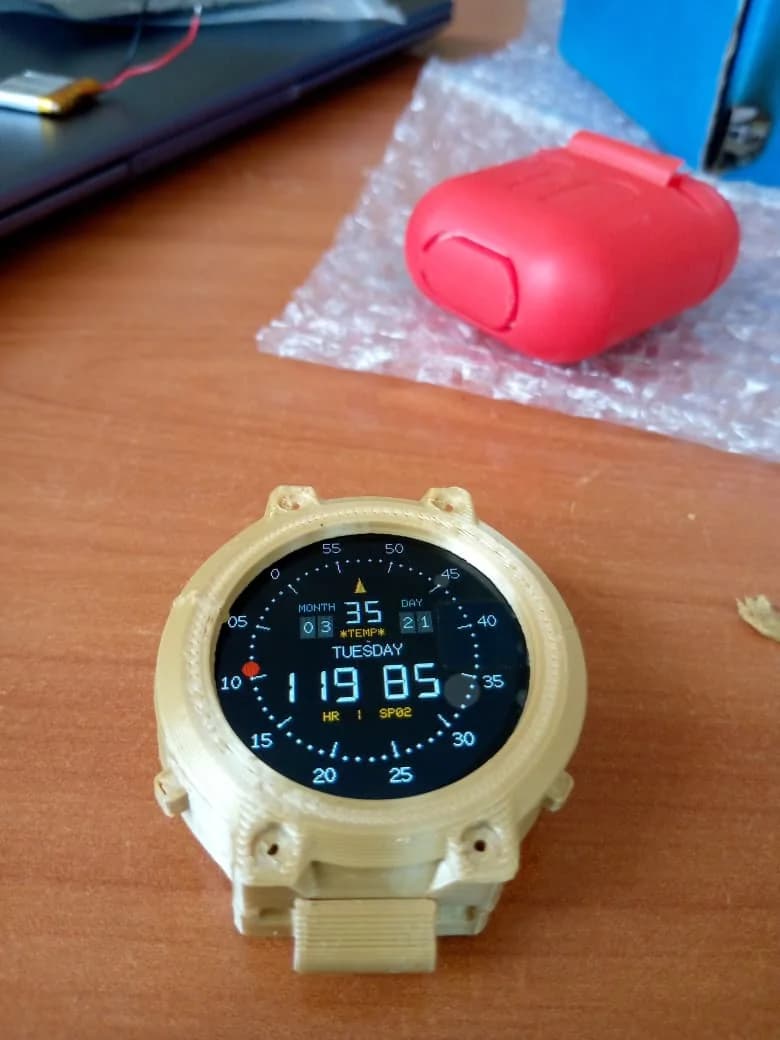
Early work explored a watch form, a patient-facing display and ways to bring physiological sensing closer to everyday life. Prototypes made the questions concrete: how should the device fit, what signals could be explored, and how might the experience connect with a wider system?
Hardware and interface studies have continued to change through hands-on iteration. The devices shown here are research-stage prototypes, not finished products.
From a device to a platform
As the work developed, the engineering scope expanded beyond the watch itself. Sensing, embedded software, connectivity, data services and digital experiences all became part of the same system problem.
The original maternal-health context remains important, while the technology direction now considers broader connected physiological monitoring. Any future clinical application would need careful technical and clinical validation.
What comes next
Current work continues through prototyping and research. Progress depends on understanding signal quality, system reliability and the evidence needed to support useful measurements in real care settings.
Read about research and validation